
EXPLORE SHOALS MUSIC ARCHIVE
Few regions have influenced American popular music as deeply as North Alabama, whose soul, R&B, country, rock, and gospel traditions helped shape the world famous “Shoals Sound.” The Shoals Music Archive, housed at the University of North Alabama, preserves this legacy by collecting recordings, photographs, papers, and everyday materials that tell the story of the region’s musical life. Its mission is to document the artists and creative communities of the Shoals, protect fragile and irreplaceable history, and engage the public in building a growing record.
The images in this exhibition come from that expanding collection. We invite you to explore them, and to share your own memories or materials as part of this ongoing story.
Please Contact: Dr. Brian Dempsey, UNA Department of History bdempsey@una.edu
Shoals Music Archive Partners:
UNA History Department
UNA School of the Arts / Entertainment Industry Program
UNA Collier Library
Muscle Shoals National Heritage Area
WHAT IS SHOALS MUSICIAN CENSUS?
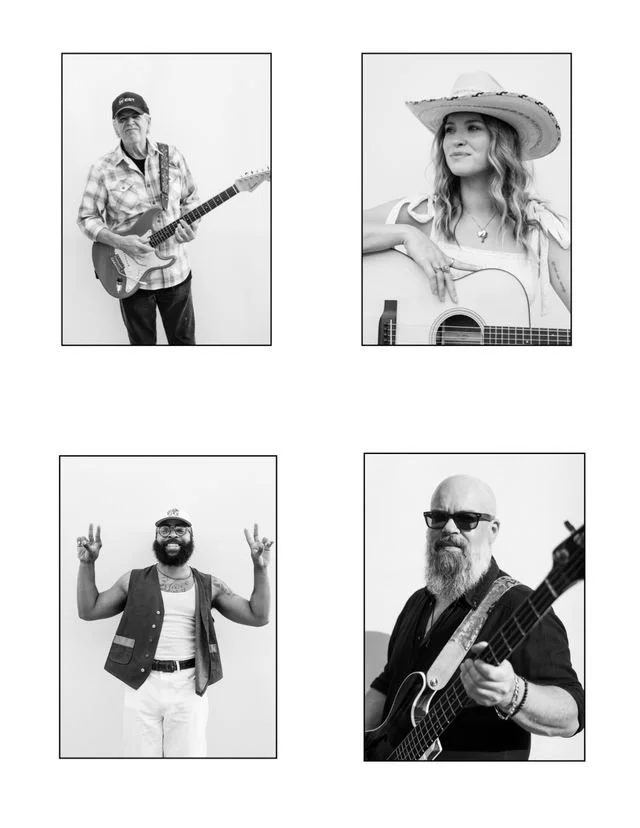
The Shoals Musician Census is an ongoing effort to document the musicians who shape the region’s vibrant music scene. Created by photographer Abraham Rowe in partnership with the Muscle Shoals National Heritage Area and the Shoals Music Archive, the project uses black and white portraiture to present the community as a unified whole. Conducted during the 2024 and 2025 W.C. Handy Music Festivals, the census has recorded 167 musicians and music professionals so far. Now housed at the Shoals Music Archive, it continues to grow as both an artistic record and a vital resource for understanding this creative community.
Curated by Shoals Music Archive and Abraham Rowe, this exhibition features artists of all ages and mediums, celebrating the legacy of W.C. Handy while showcasing the creativity that continues to define the Shoals today.
Take a self-guided tour of the exhibition by visiting each location in order:
FirstBank: 123 N Court St, Florence, AL 35630
Alabama Outdoors: 119 N Court St, Florence, AL 35630
Parker Bingham: 128 E Tennessee St, Florence, AL 35630
Myrilla Boutique: 110 S Seminary St, Florence, AL 35630
ABOUT THE PHOTOGRAPHER: MEET ABRAHAM ROWE
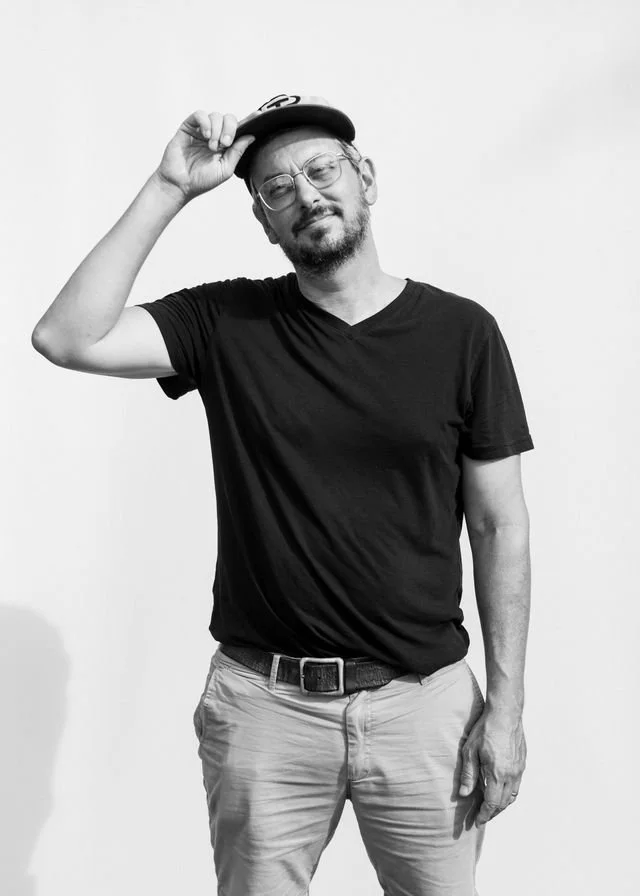
Abraham Rowe is a photographer based in Florence, Alabama. He is passionate about
documenting culture in real time and collecting stories of the South through the experiences of
everyday people. Some of his projects include Hidden Spaces, Shoals Musician Census, and
Folks of Florence, as well as documenting the local music and art scene. Abraham works in
commercial, portrait, and editorial photography, offering expertise in photo styling, product, and
lifestyle photography for manufacturing companies, artisans, musicians, e-commerce businesses, and food brands.
Editorial work has been printed in Elle Decor, Local Palate, Bitter Southerner, Rolling Stone,
The National, Garden & Gun, Southern Living, Singing River Living Magazine, and Business
Alabama as well as online at Kinfolk, Paste, and The New York Times T Magazine.
Current projects include Shoals Musician Census for Muscle Shoals National Heritage Area and
Shoals Music Archive as well as a project for Southern Foodway's Alliance documenting The
Sand Mountain Seed Bank.
www.abrahamrowephotography.com
ABOUT W.C. HANDY “THE FATHER OF THE BLUES”
W.C. Handy was born in Florence, Alabama. The son of Elizabeth Brewer and Charles Barnard Handy, his father was the pastor of a small church in Guntersville, a small town in northeast central Alabama.
Handy wrote in his 1941 autobiography, Father of the Blues, that he was born in the log cabin built by his grandfather, William Wise Handy, who became an African Methodist Episcopal minister after emancipation. The log cabin of Handy’s birth has been preserved near downtown Florence. Growing up, he apprenticed in carpentry, shoe making, and plastering.
W.C. Handy was deeply religious, and his musical style was influenced by the church music he sang and played as a youth. The sounds of the natural world also influenced it. He cited as inspiration the sounds of “whippoorwills, bats, and hoot owls and their outlandish noises”, the sound of Cypress Creek washing on the fringes of the woodland, and “the music of every songbird and all the symphonies of their unpremeditated art”.
W.C. Handy’s father believed that musical instruments were tools of the devil. Without his parents’ permission, he bought his first guitar, which he had seen in a local shop window and secretly saved for by picking berries and nuts and making lye soap. Upon seeing the guitar, his father asked him, “What possessed you to bring a sinful thing like that into our Christian home?” and ordered him to “take it back where it came from, but he also arranged for his son to take organ lessons.
The organ lessons did not last long, but Handy moved on to learn to play the cornet. He joined a local band as a teenager, but he kept this fact a secret from his parents. He purchased a cornet from a fellow band member and spent every free minute practicing it.
Handy went on to compose such well-known blues jewels as St. Louis Blues, Beale Street Blues, and Memphis Blues. Feel the blues down to your toes standing next to the very piano that shook with St. Luis Blues for the first time and see his handwritten sheets of music, originals of many of his tunes, at the W.C. Handy Museum in downtown Florence, Alabama.